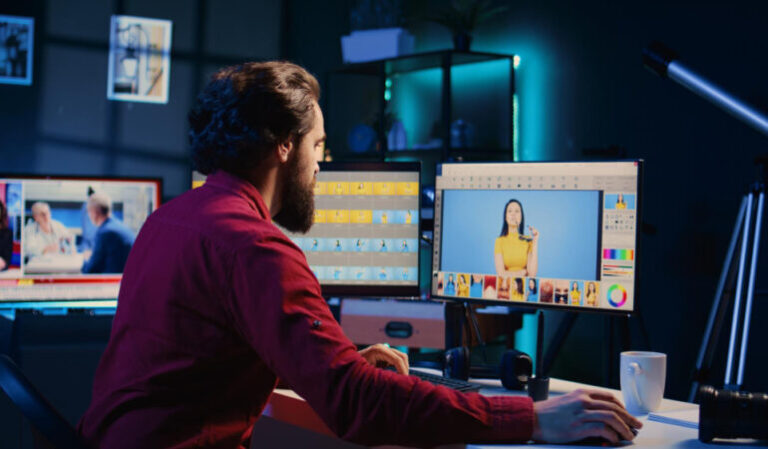

In today’s digital age, video editing has become one of the most in-demand creative skills. From YouTube creators to advertising agencies and film studios, the need for skilled video editors continues to rise. However, one question that often arises among aspiring editors is — why do video editing course fees vary so much? The answer lies in several key factors such as course duration, software tools taught, instructor expertise, and certification quality. Whether you’re a beginner exploring your creative potential or a professional seeking to upgrade your skills, understanding these fee determinants can help you make smarter learning investments.
Some institutes may offer short-term courses at affordable prices, while others provide intensive training with professional tools like Adobe Premiere Pro, After Effects, and DaVinci Resolve — often commanding a higher fee. Additionally, the inclusion of certifications and practical projects also impacts the overall cost. In this blog, we’ll break down the main factors that influence video editing course fees, helping you understand what you’re really paying for.
Length of the Course and Depth of Learning
The length of the course is a very significant factor that affects the fee structure. Short courses (or crash courses) typically last a few weeks and cost less, although they often only cover bare-bones content: trimming, transitions, colour corrections, and simple effects, etc.
Longer courses, such as diplomas and advanced certifications, may last several months or a year and contain much more complexity, including motion graphics, visual effects (VFX), audio syncing, and storytelling, etc. With more hands-on learning, real projects, and mentoring, these programs usually cost more.
Software Programs: Tools and Industry Standards
The selection and quantity of digital marketing course with placement are critical for pricing. A course in which students only learn free or low-priced software, such as Filmora or HitFilm Express, will be cheaper than a course where students are learning industry-standard professional-level software programs like Adobe Premiere Pro, Final Cut Pro, DaVinci Resolve, and After Effects.
These more advanced industry-standard tools incur costs for licensing variations of the programs, high-end systems to operate the software packages, and access to skilled instructors. Though these are substantial costs at the start, it is money well spent upon entering the job market when employers are looking for candidates who have experience with advanced situations.

Certification and Accreditation
The primary benefit of certification is to lend credibility to your learning. The value associated with certification usually also influences your course fees. A basic training certificate provided by a local institution may be less expensive, but it may not have the same value as a certificate from a global media company or an industry-standard certification.
Institutions that have a connection to multi-media companies, film academies, and software companies (using their certification, e.g., Adobe Certified Professional) are likely to charge a higher fee due to the brand reputation and validation of the brand. A certification will give you credibility, in addition to enhancing your resume and opening up job opportunities at production houses and media companies, or online content companies.
Knowledge of Instructors and Course Quality
The instructors’ experience and background can heavily influence the Video Editing Course Fees. A course could be priced higher if the instructors are experienced editors who have worked on a commercial project or a film (or a large brand project) than a similar course offered by some entry-level instructors.
Instructors who provide experience relevant to student projects educate students not just how to work in the editing software, but also help students understand why their creative choices or decisions matter (pacing, rhythm, colour choices, sound, etc.) The added dimension the instructor provides to the student experience during the mentorship helps prepare the student for a professional model.
Infrastructure and Learning Environment
To produce high-quality video editing, consumers will need a strong infrastructure that includes high-powered computers, licensed editing software, soundproof labs, and colour-calibrated monitors. If the institution has invested in this advanced infrastructure, it will incur a higher cost of operation, which will be reflected in its course fees.
Some courses offer students access to studio environments where they may experience an all-encompassing post-production workflow that goes from importing raw footage to rendering output. This kind of experience goes much further in connecting classroom learning to real-life editing workflows, while a course that is delivered online, or one that uses a very simplistic space, could be a cost saver on course fees, but could lack this experience. Ultimately, your decision is based on how engaged and realistic you want your training experience to be.
Bottom Line
Ultimately, video editing course fees are shaped by a combination of duration, tools, instructor quality, and certification credibility. Instead of focusing solely on price, think about what you’re getting in return — skill mastery, project experience, and industry recognition.
If you’re looking for a comprehensive program that balances affordability with high-quality learning, Excellent Multimedia is an excellent choice. Our institute offers hands-on training in leading software tools, real-world project experience, and expert guidance from seasoned professionals. Whether you’re aiming to become a professional editor or a creative content creator, our course provides the perfect launchpad for your career.